

Somewhere on Oʻahu, someone calls 911. A frightened voice describes a crime in progress. Officers head toward the scene, navigating traffic as precious minutes pass.
Above them, a Honolulu Police Department drone takes a direct route to the emergency. Before officers arrive, its pilot can help answer critical questions: Where is the suspect? Is someone hurt? What dangers await?
That early view can change what happens next.
HPD’s Drone as First Responder program brings another set of eyes to emergencies, helping officers track suspects, protect families and reach people who need help.
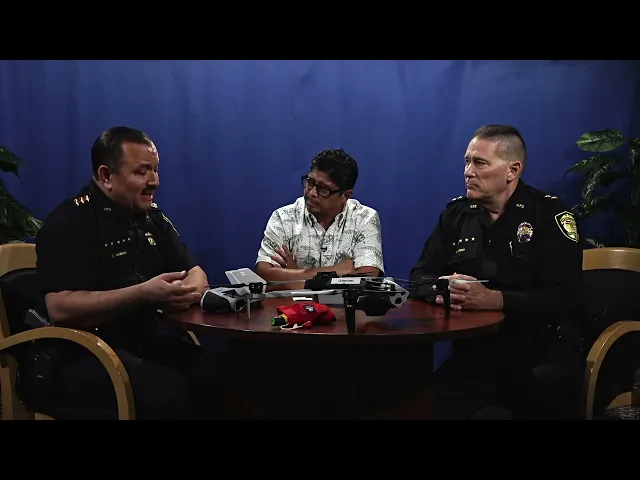
On Augie’s Community Connection, Assistant Chief Brian Lynch and Major Clifford Ramson joined Councilmember Augie Tulba to explain the technology and the responsibilities that come with it.
The pilot program began in Districts 1 and 5 in Honolulu’s urban core, with islandwide expansion ahead. Some nearby calls have drawn a drone response in one minute or less, according to Lynch.
Getting Ahead of Crime
When someone reports a robbery, assault or other urgent incident, information can reach the drone team while the caller is still speaking with a dispatcher. Operators can launch toward the location as officers respond on the ground.
From above, the pilot watches the scene and shares live updates.
“The officer is no longer walking into a blind situation,” Ramson said.
Knowing what awaits gives officers time to prepare, coordinate and consider how to calm a dangerous encounter.
If a suspect runs, a drone can follow. If someone drives away, the pilot can track the vehicle and direct officers toward it. Instead of reacting with limited information, officers can position themselves for an arrest.
During a car break in, a drone could capture the crime while its operator describes the suspect’s clothing and movements to approaching officers, Lynch explained. That footage can also support an investigation.
Tracking stolen vehicles from the air offers another way to avoid dangerous pursuits.
“Instead of having to chase stolen cars in cars ourselves, we can use a drone,” Lynch said. “It’s safer.”
The possibility of being followed from above may also discourage criminal activity. Leaving the scene no longer necessarily means escaping detection.

When every second matters, having an early view of an emergency can help first responders make informed decisions before reaching the scene. Photo: Hawaii News Now
A Lifeline Beyond Police Work
For someone struggling in the water, the first help to arrive could come from the sky.
A drone can carry a device that drops into the water and inflates, giving a swimmer something to hold while rescuers approach. Those extra moments could make a profound difference to a person fighting to stay afloat.
“Somebody can grab onto it and at least stay afloat until help can get to them,” Ramson said.
The same aerial perspective can support other emergency crews. At a fire, a drone can provide overhead surveillance of the incident, helping the Honolulu Fire Department assess conditions as firefighters respond.
During flooding in Waialua, tactical drones helped crews evaluate conditions and communicate evacuation messages. Loudspeakers, sirens and spotlights extend their reach, while infrared equipment can detect body heat at night to help locate missing people or lost hikers.
Whether crews face floodwaters, a fire or a search after dark, an elevated view gives them another way to understand the danger and guide help toward those who need it.
Earning the Community’s Trust
Bringing cameras into the sky also brings questions about privacy.
The DFR program responds to calls for help and legitimate requests from officers. It does not authorize pilots to roam neighborhoods searching for wrongdoing.
“We don’t go flying around looking in people’s backyards and stuff because that’s not what DFR is,” Lynch said.
Department policies establish boundaries for pilots. Flight logs document drone movements, with plans to make those records available through HPD’s website.
Recording begins once a drone reaches its assigned scene, according to Ramson. Afterward, footage enters a secure database. Recordings with investigative value follow evidence protocols. The system automatically deletes footage without investigative value after 30 days.
The People Behind the Controls
Behind every flight stands an officer trained to make decisions that affect people’s safety.
Applicants must hold an FAA Part 107 certificate and complete HPD’s selection process. Those accepted receive about 40 hours of internal training covering police operations, applicable laws, search and seizure rules, and practical flying skills.
Following a suspect while communicating by radio and coordinating officers on the ground demands concentration and practice.
“The training never stops,” Ramson said.
For a department facing staffing shortages, drones help place officers where people need them most.
“The drone’s not going to replace a police officer,” Ramson said.
For the person waiting at the other end of a 911 call, the goal remains deeply human: Help is coming, and a trusted well trained human drone team is already watching over the scene.
Category Tag:
Share this story
Subscribe to the District 9 mailing list
Receive mid-month and end of month updates, sent directly to your email!


